Showing posts with label Interesting Facts. Show all posts
Showing posts with label Interesting Facts. Show all posts
Highest Peak In The World Mount Everest - History Facts About Mount Everest
March 24, 2020
Highest Peak In The World Mount Everest - History Facts About Mount Everest
Mount Everest:
Mount Everest is the highest peak in the world. It is located on the border of Nepal and China in the Himalayan mountains of Pakistan. Its height is 8848 meters or 29028 feet. It was first headlined on May 29, 1953 by Edmund Hillary and Tanzing Norgay. Nazir Sabir was the first Pakistani to head it. The Nepalese name of Mount Everest is Sagarmatha.
Climbing Date:
- In 1924 George Mallory and Andrew Irvine tried to mount it, both of them unable to return.
- In 1934 he was tried by a British Maurice Wilson, but was killed.
- In 1938 a British expedition reached 27,000 feet but had to return due to bad weather.
- In 1951 a British expedition surveyed Mount Everest.
- In 1952 two hundred expeditions tried to overthrow him but he had to return due to bad weather.
- It was taken over in a British campaign in 1953.
- In 1996, 15 people were killed while climbing it.
- In 2005 a French Eurocopter helicopter landed on it and came down for several minutes.

Nepali hiking officials say Kami Rita Sharpa, a 49-year-old Nepalese citizen, has set a new world record for the 23rd time as the world's highest peak Mount Everest.
History of Rajput - Biography of Rajput - Facts about Rajput
March 20, 2020
History of Rajput - Biography of Rajput - Facts about Rajput
Rajput:
 Rajputs, which mean the sons of kings and they associate their lineage with other Malay personalities. That is why so many ideas have been established about their origin and origin. Aishwarya Prasad says he is an umbrella of the Vedic period. Some say that some of the Siuthan and Hun invaders had settled in Rajputana and had acquired military power by adopting a Brahmin religion along with other goons and cavalry. Mr CV Vaidya says that Chandrapur, the author of the Portuguese Rajasa, was unable to prove the Rajputs to Suraj Bansi and Chandra Bansi, calling them 'Agni Kal' under a new theory. That is, they belong to the family of fire, and Wischt, who lit the sacrificial fire. This gave the Rajputs an inheritance. But now some extremist Hindus refuse to take this poetic trap, and most believe that there is foreign blood in the veins of the Rajput nation. In his famous book 'History of Rajasthan', Todd upheld the same view and called the Rajputs a close relative of the seven tribes of Central Asia. James Todd says that many nations invaded India from ancient times to Mahmud Ghaznavi. They are included in the Chhattis Raj Kali of the Rajputs. Importantly, their deities, their progeny lineage, their ancient names and many similarities are much more similar to the venerable China, the Tatar, the Mughals, the Jats, and the Satias. So it is easy to assume that the Rajputs and the latter nations belong to the same race.
Rajputs in Muslim areas:
In the seventh century, Huang Tsang did not use the word Rajput. Referring to the time of the Arab invasions (8th to eleventh century AD), Buddha Prakash writes that the word katri is seen less and the reform of the Rajput was not common. According to Dr. P. Saran, the word Rajput was not used in the ethnic sense until the tenth century AD. Even the term Thakir, which Muslim historians use a few times in their writings, is about a tribe. The Rai tribe had long existed in Iran. First, Muhammad Bin Qasim gave a jat to Rangi (Rana). Rawat is made up of a root or root or root. This means the king in eastern Iran. It should be noted that the Rajput word appears somewhere before the seventh century. Probably its earliest pronunciation is found on the books of Han Winner Truman. His sons and daughters are referred to as Rajputs. This means that the word was used in the literal sense (the king's descendants), which is equivalent to the Iranian word vas pohor (the king's son). Wis also comes in Sanskrit in the sense of the king and Pohar is the synonym of Sanskrit, but has been used by the king since the seventh century. Thus, when Shankar Acharya came under the influence of the hardcore Brahmins, the word Raja Patra was used. Kalhana called Rajputs in Raj Tarangi clearly foreign, arrogant, brave and loyal. These are not mere myths that no Muslim historian has mentioned Rajputs in the battles of Punjab, Sindh, Balochistan, Makran, Kakan, Afghanistan, Ghazni and Kashmir.
Evolution of Rajputs:
Abu al-Ghazi describes the traditions of the descendants of the Tatars and the Mughal nations. The same traditions have come to life. He says that the name of the heir to the Mughal and Tatar was Pishan and his son's name was Oghuz. The Oghuz had six children. The older son's name was Ken, the sun. The second son's name was Aoi, the moon. The Tatars claim that they belong to the Moon, the Moon. Ayu's son was Jalis. Jules' son was Hugh. Which has led to the generation of Shahan China. Elkhan, who was on the sixth of Iowa, had two sons. One Khan the other Nagis. The Nagas descendants settled the Tatar. Genghis Khan claimed he was of Khan's descent. The Nagas are probably the breed of poachers or snakes. Afghanistan and the Northwest Territories have been associated with India in ancient times and this area was one of the major centers of Hindu civilization in ancient times. In the days of India, it was called Gandhara. Kabul, Gandhar (Kandahar) and Sistan have often been part of India politically. These places were called white Hindus in the Periodic period. The ruins of the area's old buildings and monasteries support it. Especially the artifacts of the prestigious University of Taxila, which had a reputation two thousand years ago. In those days, whatever conqueror invaded India, it was considered to be under umbrellas shortly. Looking at the coins shows that the name of the first ruler is foreign. But the name of the son or grandson is in Sanskrit and his throne or crown was used according to the umbrella ritual. Most tribes of the Rajputs were descendants of Sakhi or Sithi invaders or they were among the white Hunan invaders. This was the time when invaders from outside were entering the Hindu society and Hindus were practicing civilization. Local pundits were trying to take the lead in giving tribes to these attackers. Thus they were trying their best to promote Hindu civilization. So the religions of Vishnu, Shiva, Chandi and Syria etc. spread a lot. This not only brought the Burmese religion to its peak. Instead, Buddhism was severely shocked and forced to say goodbye to the subcontinent. Thus the Rajputs, together with the Brahmins, revived the Hindu religion and destroyed the Buddhas. The Sikhs, Pahlav Yunas, and the Turks, who were famous nations of Central Asia, invaded India and entered Hinduism and called Rajput. Wilson says that the Rajput tribes Rathore, Pawar and Gahlot etc. were already settled here. All four tribes are actually Jat, later known as Rajput. Why did they rule then? On this basis, the term Rajput or Raj Patter, the descendants of kings, came into being. Its origin is from Kalma Vipoh (Shah's son). Wilson recognizes them as aliens. Because they, along with the Saka and other tribes, declared the subcontinent. Rajputs are formally Jat and Gujar who enter the Brahmin religion and those who refuse to accept and accept the terms of the formal Brahmanical system have not been formally admitted to the Hindu religion and they remain the same Jat, Gujar. And so are you. That is why the Jats and Rajputs are common tribal names ۔ In view of their purpose, the devotees organized a sacrificial fire in Koh Abu, Rajasthan, and cleared many new people through this fire. These people were given the name of Rajputra (descendants of the kings) who were already there. Interestingly, Iran, especially in Sistan, was the descendant of the great landowner king. The term of the subcontinent is a translation of the Iranian word for Rajputra. Lawgoods are wrong to say that the initial occupation of the Jatts was replaced by Navard Rajputs on this land. The lawgiver forgot that pawar, tanwar, bhatti, wagon casks etc. are found in both Jats and Rajputs. Instead of the Jats, the Rajputs took the position that the Brahmins instigated the latter. Because the Rajputs came to Hinduism a while ago. The Brahmins gave high places to the Rajputs, wrote tales in praise of them and met them with Ram Arjun (Suraj and Chandra Bansi). Instead, the Rajputs again gave Pur, Vishnu and Agar Hara. It is noteworthy that upon the conquest of the subcontinent, deliberate efforts were made to integrate the Jats into the Brahmanical system. In order to make foreign Sakas a part of Hindu society, the famous 'Varana Stoma' rituals were invented if Wala says payment of those rituals was very easy, which was simply a code of conduct aimed at foreigners. To be part of Hindu society through religious rituals. According to Vincent Smith, some Gundas and Bharats accepted the Brahmin religion after gaining military power, and thus they joined the Rajputs. Thus the Rajputs are colored Jat and Gujar in Burmese color. That is why we only find Jats and Gujjars in Central Sindh, Rajasthan Gujarat, long before the appearance of Rajputs. If a Rajput marries a Jat woman, he will not be a Jat. But if he or his widow remarries, his offspring will become Jat. This is the real point of the problem in a patriarch and Jat only in the second marriage of the widow. The widow's marriage has been in every age. But the Rajputs did not even want to hear about it under the false, immoral and unfair views of the Brahmins. At present, the division of their Jats and Rajputs into Punjab is very confusing. The most important point of the widow's marriage was the disagreement between Jats and Brahmins on the occasion of the sacrifice of Koh Abu. Those who accepted the terms offered by the Brahmins were called Rajputs. On the contrary, those who insisted on marrying the widow were called Rajputs as they entered Hindu religion.
The rise of the Rajputs:
CV Vidya writes in the History of the Middle India that when the spirit of warfare was wiped out among Buddhist dominions, the Rajputs established their rule in different parts of the country.
- According to the time of the arrival of the Muslims from the seventh century AD till the twelfth century AD, after the death of Harish of Smith, the period of Rajputs can be called.
In Kashmir, the Dugar or Dogra Rajputs are functioning and the people of this nation are also originally from the Jatts and have been included in the Rajputs because of their kingship. At the time of the arrival of the Muslims, all the dynasties from Kabul to Kamrop to Kashmir to Kokin were Rajputs and their Chhattis Raj Kali (royal family) were ruling. Chandra Bray first mentioned this number and Pandit Kalyan has confirmed the number in 'Tarangi Raj'. James Todd's statements suggest that his numbers are far greater than the later names differ. The Maurya family is included in the Chhattis Raj Kali's first historical family in the subcontinent but not because of it, but because of an ancient Mewar family.
Ethnic division of Rajputs:
These foreign nations adopted the Brahmanic religion, so Hindu pundits declared them not only an umbrella and gave them divers and their ethnic affiliation with other Malay personalities. In this way, they are racially direct in five categories. That is, the Rajputs are divided into five classes which are as follows. #Suriya or Suraj Bansi = Their heir is the high Ram Chandra and all the Suraj Bansi tribes meet the 'Loo' and 'Kush' of the raja's descendants. # Chandra or Chandra Bansi = Their inheritance was the Supreme Lord Krishna. The title of Hari Krishna was Yadav, which has an accent magic. Therefore, the Chandra Bansi tribes are also called magic besides Yadav. # Agni Kul or Agni Bansi = According to tradition, the Brahmins created a fire pit on Mount Abu with the help of the gods. # Nag Bansi or Tashkash = In Indian Aryan the puppet is called a snake and it is claimed by the nations that they are of the Nag race. # Jat or Jat = Jat people have ethnic relation with Rajputs. That is why many Jat and Rajput tribes are the same as Parmar Jats and Rajputs too. There were kings in the era, their descendants are now called Rajputs - or Jat and Rajputs are two branches of the same race.
The role of the Rajputs:
Aishwarya Prasad says that the Rajputs had made the war their profession and had neglected the high and honorable duties of the administration. Which had made Ashoki and Harsh non-existent. There is no written evidence that shows the Rajputs' achievements in the realm of administration and government. Throughout their history there has been a long series of tribal wars. That is why they could not withstand the external invaders and they had to retreat and their power began to decline. The tombs and screams caused their ruin. The Quaid of casteism brought about mutual hypocrisy and jealousy. Therefore, their economic strength was weakened. Therefore, his system of government was a feudal institution. They were not politically united. So they were forced to bow down to the outside invaders. CV Vidya writes that the Rajput kings, except Kanoj and Bengal, were not allowed to have a permanent army. Some recruited the army in times of need and some sought their deputies from their landlords. The fact is that the public was not interested in running or maintaining governments. Only the ruling family, along with its tribal brothers, used to rival rivals. Victory was won, defeated and handed over to a country rival. The people did not feel the return of Raj. Since the Kannauj festival and the Rashtri Kot of the Deccan were tribes of war, they did not include the heroic elements in their army. However, the Palas and the Sena kings of Bengal were recruiting some people from Malwa, south Gujarat. Because the number of Rajputs was not enough in Bengal and Bengalis were not considered warring nations at that time. In the rest of the country, the Rajput kings did not have a future army. Rajputs were established in Delhi, Ajmer, Kanauj, Gandhar, Malwa and Gujarat in the northern subcontinent. Although the founder of the state of Delhi and Ajmer was Aning Pal, the Pthulvi Raj received the highest fame. Various Rajput families ruled in Kanauj. Jalandhar and Anand Pal became more famous among the rulers of Gandhara state. Jay Chand Rathore made quite a name. In Malwa, there was the government of the educated family. King Bhuj of this family became very famous. He was a scholar and poet himself. Different families ruled in Gujarat Bandhilkhand and Bengal. Famous kings have also passed in the state of Mewar. The states of Chola, Chiara and Pandya were established in the lower Deccan (southern region).
Royalty of the Rajputs:
The Rajputs, however, initially defended the Muslims successfully and prevented the Muslims from proceeding. And they were sometimes united against the Muslims. Particularly in Jaipal's leadership against Mahmud Ghaznavi, Pathavi against Mohammed Ghauri under the leadership of Raj Chauhan and Rana Singh against Babar. But it was a timely federation that was confined to war only, and after the war, the same hypocrisy, love and war continued between them. Rajputs are remembered even today for their bravery. No such thing has been born in Shujaat and Dulauri in the nations of India. Rajput was a talkative, arrogant expert and high-ranking prince. Used to pretend to save their lives. The Rajputs, through their virtues, ruled the subcontinent for a long time (from the seventh century to the twelfth century CE) and established a civilization. But thanks to these aforementioned evils, their power declined and they had to retreat against the external invaders. The Rajputs were not only a man of war, but also a man of good character and a great host. The hospitality and generosity of the guests were there. Rajput was a fan of art and literature and music. Rajput painting had its own individuality. That is why a painting school came into being. Every king had a song in his court, which was composed of songs of family greatness. They had a good social life. Although they had the tradition of marriage in childhood, the girls of the upper family used to marry when they were young. The Rajpoot women could subdue their purity and zeal. The ritual of sati and essence interpreted this sentiment. When a woman's husband dies, she likes to be on fire with her husband. Thus, after the fear of failure in a war, Rajputs killed their women and went to war on the battlefield. (Anwar Hashmi, History of Pakistan and India. 71) A strange ritual was married. On the contrary, it was necessary that the marriage with which they were married should not have a hierarchy. Rajput Rana, Rao, Rawal, Raja and Rajan, etc., are used in the proper sense, all of these words belong to the ruler. Among the Muslims, the Mughals took advantage of the warlike spirit of the Rajputs and recruited the Rajputs frequently in their army. Most of the Mughal conquests were held by the Rajputs. Jahangir writes about Ajmer, that if needed there could easily be fifty thousand riders and 300,000 foot soldiers.
Biography of Raja Poros - History of Raja Poros - Facts about Raja Poros
March 20, 2020
Biography of Raja Poros - History of Raja Poros - Facts about Raja Poros
Raja Poros:
“Many people believe that Raja Poros was a Rajput. Where did the brothers come from at that time? This was introduced by the Persian people in the twelfth century. The Purus was originally Gujar or Por is still the guttar of Gujjars. Raja, the king of Gujarat and Jhelum, whom Alexander gave him power and made him his friend and friend by giving him more territory. It is worth mentioning that all the details about Porus, including Greek historians including Aryan, Sterbio, and other historians, do not mention Alexander in any local or Hindi source. If the Greeks did not mention it, I would never know that Alexander ever invaded India.
Alexander's Footsteps:
 In 326 BC, Alexander rested for some time in Taxila, on the banks of the river Jhelum in the month of May, and the Poros area was across the Jhelum River. Porus did not accept Alexander's orders and started preparations for the match. The army of King Porus numbered fifty thousand and was on the other side of the river. King Poros's army consisted of two hundred elephants, three hundred chariots, four thousand riders and thirty thousand infantry. Porus was trying not to cross the Greek river. Alexander was threatened by the elephants of Porus. But he trusted his horsemen more than elephants. For Alexander's army, drowning the river was not easy because the river was rising. The easiest way to drown the river was to wait until October, when the water was broken and the river was reduced. But Alexander could not wait so much so he decided in Aryan's words that he would steal the way.
Attack:
Alexander announced to deceive the enemy, that he would wait for the water to come down, and to deceive the enemy, he dispatched the army to the vicinity and to collect supplies. On the other hand, his fleet of boats was wandering around looking for a suitable place to cross the river. Six weeks passed in this operation. In the meantime, the rain started and settled down. The Greek fleet, after searching and exploring the river, chose 16 miles ahead of the army base. Alexander immediately started implementing the project. In Aryan's words, he acted with great care. Alexander left five thousand men to guard the camp, and accompanied the eleven or twelve thousand troops, including both infantry and riders, and departed at night. As Alexander leaves, the storm arrives and the rain begins. Therefore, the enemy of the movement of the Greek army could not be known. Taking advantage of the rain, the Greek fleet unloaded troops on the other side without any resistance. When it was reported to Porus, it was too late and in a hurry he came in competition with 2,000 thousand riders and 120 chariots, but he was defeated and four hundred of his men were killed and all the chariots were lost.
Porsche's power:
According to Greek historians, the surviving soldiers reported this to Poros. Alexander, meanwhile, assumed a better position under the wisdom of war. The Hindi king also came with the army, but his troops found a place in the uneven terrain. There was war, however, and Purus was defeated. The elephants of Porus were killed or imprisoned and their chariots destroyed. Three thousand riders, at least twelve thousand foot soldiers were killed and nine thousand taken prisoner. The loss of the Macedonians was only a thousand lives lost. Porus, who was six and a half feet tall, was a strong man. Kept fighting till last But eventually he wound up with nine wounds and was arrested.
Alexander's generosity:
Alexander dealt with his brave rivals with great courage and, with a sore forehead, responded to his insistent request that he be treated like a king. Sikandar gave it to the ancestral home of the conquered king and gave him a much wider territory and, thanks to Alexander's generosity, Parsa became loyal to Sikandar.
Considerations:
The state of Rajapuris was no great state. Aryan states that the western boundary of the Raja Poros state was the Jhelum river and that ahead of the river, Raja Taxila was his enemy. S. Cyrus was a sovereign king in the north of his kingdom. It has been called by Aryans the sovereign king of the hill Indians and in the south was a sovereign king Sarpi Thass. In whose country the mountainous salt chain was located. That is, there was no major area under the control of Raja Porus. Its territory was in the north to the forests. That is, only the area between the River Jhelum and the Chenab River was near it. In the east between the Chenab River and the Ravi, another king was also named Porus and his enmity was from Porus. On the south side of the south were the Nation Kethi and the other Qi. He helped Alexander against Porus. The Mali people were settled in the south and Poros relations were no better. They were attacked jointly by Raja Porus and Raja S. Sirius and many other kings but defeated.
Short state:
This question arises as a small state whose population will not be as large as the number of its army. What was the resources of his short state so that he could have such a large army? According to Sir Brits, if we imagine guns in place of chariots, then this army will be equal to Maharaja Ranjit Singh. However, Maharaja Ranjit Singh ruled other areas besides Punjab, including Kashmir, Hazara, Dara Khyber and Dera Ismail Khan on the western bank of the Indus. Alexander gave to the Parsis the Glasgian tribe, which had a large city in its possession, thirty-seven. Yet no major area was ever under its control.
Reality:
It is well-known from this discussion that the area of Rajapuras was situated between the river Jhelum and Daya Chenab and it was not a large area and there was no population at that time. The other states that were around his state were also small and short states and the whole relationship with these states was not good. He did not help Porus against Alexander. It is well understood that the number of the army of the Porus is presented with exaggeration by the Greek historians. In fact, Alexander could not cross the river due to the wave of the river. When the Greeks crossed the river, it was reported to Porus, and with a full force that numbered at least two thousand, the number of riders could not exceed two hundred, and a few elephants. And some chariots were left. In this short battle, Porus was defeated. Because the Greek historians write that Porus himself came in haste. Then he writes that the soldiers who escaped after the defeat of this army reported it to Poros. After this Porus came to confront his army and was defeated. It is actually stated to increase the importance of Alexander and Porus; 180; Because the Greeks were fascinated by the personality of Porus and so exaggerated his army and competition and Alexander's war tactics. You can also guess that the Greeks faced severe resistance everywhere and hard labor, except for a few places. But the Greeks have not provided enough details of these battles. It was only a few years after Alexander that the kingdom of Porus was taken away. If he was as powerful as the Greek historians had told him, his kingdom would not have been so easily chosen.
What is Corona virus? Detail & Explaination about Corona Virus
March 19, 2020
Corona virus outbreak, 2019 - 2020:
The Corona virus outbreak is under investigation for the
beginning of 2019-2020, but it is likely that it spreads from China's lion
hubby (seafood market) to China and then around the world.
Outward signs:

Symptoms of quad 19 (Crohn's virus) are non-specific.
According to documents examined, 80.9% of victims suffer from fever, 67.7% have
general weakness and dry cough, and 18.6% have shortness of breath. Blood tests
also confirm white anemia. The evolutionary period between the appearance of
the disease in a patient is from one day to fourteen days, the majority being
five days, in one patient the evolutionary period between the appearance of the
disease is 27 days.
World Code of Conduct:
On January 15, 2020, the World Health Organization set a
code for the diagnosis of a new corona virus, developed by the virology team
from the Charity Hospital in Germany.
A concise review of the outbreak
 According to Chinese government documents, the first
confirmed patient on November 17, 2019 was a 55-year-old man from Wuhan, Hubei,
China. The following month, the number of Corona virus cases in Hubei gradually
increased to 200, followed by a rapid increase in January 2020 patients. On
December 31, 2019, in Wuhan, the capital of the province of Hubei due to the
virus, the Department of Health authorities were notified of unspecified
pneumonia, and investigations for the disease began early next month. The
majority of those affected were from a marine animal market where live animals
are traded, which is why it is said that the virus is zoonotic. During the
early stages, the number of infected people continued to double every seven
days. In the early and mid-January of 2020, the virus spread to other Chinese
provinces, and the arrival of the new Chinese year contributed significantly. ,
Wuhan is a hub of transport and a major railway station in China, causing the
affected population to spread rapidly throughout the country. On January 20,
China confirmed 140 new victims, one from Beijing and the other from Shenzhen,
in a single day. Subsequent official data shows that by January 20, 2020, 6,174
people had already had symptoms. On January 30, the WHO termed the outbreak a
global public health emergency. On March 13, the WHO declared Europe a new
epidemic. As of March 15, 2020, 159,000 patients worldwide had died, of which
5,800 have died, and 75,000 have recovered. Now the pace of patient growth is
slowing down, especially in cases with mild symptoms or no symptoms.
According to Chinese government documents, the first
confirmed patient on November 17, 2019 was a 55-year-old man from Wuhan, Hubei,
China. The following month, the number of Corona virus cases in Hubei gradually
increased to 200, followed by a rapid increase in January 2020 patients. On
December 31, 2019, in Wuhan, the capital of the province of Hubei due to the
virus, the Department of Health authorities were notified of unspecified
pneumonia, and investigations for the disease began early next month. The
majority of those affected were from a marine animal market where live animals
are traded, which is why it is said that the virus is zoonotic. During the
early stages, the number of infected people continued to double every seven
days. In the early and mid-January of 2020, the virus spread to other Chinese
provinces, and the arrival of the new Chinese year contributed significantly. ,
Wuhan is a hub of transport and a major railway station in China, causing the
affected population to spread rapidly throughout the country. On January 20,
China confirmed 140 new victims, one from Beijing and the other from Shenzhen,
in a single day. Subsequent official data shows that by January 20, 2020, 6,174
people had already had symptoms. On January 30, the WHO termed the outbreak a
global public health emergency. On March 13, the WHO declared Europe a new
epidemic. As of March 15, 2020, 159,000 patients worldwide had died, of which
5,800 have died, and 75,000 have recovered. Now the pace of patient growth is
slowing down, especially in cases with mild symptoms or no symptoms.Burj Khalifa Facts - Burj Khalifa At The Top How?? Explain by Umair Ahmad
February 13, 2020
Burj Khalifa Facts - Burj Khalifa At The Top How?? Explain by Umair Ahmad
Burj Khalifa:

Burj Khalifa is located in Dubai, United Arab Emirates. The height of the tallest building is eight hundred and twenty-eight meters, twenty-seven hundred seventy feet. The building consists of one hundred sixty floors. Formerly named Burj Dubai, the world's tallest building located in the United Arab Emirates city of Dubai, which surpassed Taiwan's Taipei 101 on January 4, 2010. It is the tallest man-made building in history. The building was named after the President of the United Arab Emirates, Sheikh Khalifa bin Zayed Al Nahyan. Construction of the Burj Khalifa began on September 21, 2004 under the name Burj Dubai. The architect of the building is Adrian Smith, who is from Skidmore, Owings and Merrill (SOM). There are also different views among people in the United Arab Emirates regarding the Burj Khalifa. Some people believe that the building is named after the UAE
Height:

The total height of the Burj Khalifa is 828 meters, with a total of 162 floors. As such, it is also the highest floor building in the world. When the building touched a height of 512 meters (1680 feet) on July 21, 2007, when it completed 141 floors, the world's tallest building overtook Taipei 101 (509.2 meters) (1671 feet), but taller. Regarding buildings, the World Council on Tall Buildings and Urban Habitat acknowledged it, but said it would not be called the tallest building until it was completed. Just as the Yong Hotel, located in the North Korean capital Pyongyang, is not considered a complete building. Therefore, it was officially honored on January 4, 2010. Similarly, in February 2007, the Burj Khalifa surpassed Chicago's Sears Tower and was awarded the highest-floor building in the world. It should be noted that Sears Tower has 108 floors
Features:
 The world's fastest elevator has also been installed in the Burj Khalifa, which travels at speeds of 18 meters per second (65 kilometers per hour, 40 miles per hour). The world's fastest lift was installed in the Taipei 101, which operates at a speed of 16.83 meters per second (60.6 kilometers per hour, 37.5 miles per hour). The entire building plan includes 30,000 residential homes, 9 hotels, 6 acres of gardens, 19 residential towers and Lake Burj Khalifa. The construction cost $ 8 billion. Upon completion, the tower sprawled over an area of 20 million square meters. In addition, Burj Khalifa Tower is the world's tallest mosque located on the 158th floor. Earlier, the world's tallest mosque was located in Riyadh, Saudi Arabia's Burj Al-Malka.
The Middle East's Lost Honor
By the completion of the Burj Khalifa, the Middle East has once again earned the honor of being the tallest building in the world, which had been in the form of the Pyramid of Egypt for 3,000 years. Since the construction of Lincoln Cathedral in 1300, the Middle East has been lacking this honor.
Babri Masjid History Facts - Babri Masjid India Issue Explained by Umair Ahmad
February 09, 2020
Babri Masjid History Facts - Babri Masjid India Issue Explained by Umair Ahmad
Babri Masjid:
The Babri Masjid (or Mir Baqi Mosque), named after the Mughal king Zahiruddin Mohammad Babar, was one of the largest mosques in the Indian state of Uttar Pradesh. It was built by Mughal Salar Mir Baqi.
Construction Background:
 The Babri Masjid was built in Ayodhya in Uttar Pradesh in 1527 by Mir Baqi, a prominent man associated with Darbar Babri, under the orders of the Mughal king Zaheeruddin Mohammad Babar (1483 - 1531 AD). This mosque was a masterpiece of Islamic Mughal architecture. Three domes were erected on the Babri Masjid, the middle of which was a large dome with two smaller domes. In addition to the dome, the mosque was built of stones, including the courtyard. A well was also dug in the yard. The dome was made of small bricks and was plastered with limestone. In order to keep the mosque cool, its roof had raised ceilings and forged windows for air. One of the most important things in the interior construction was that the silence of the person standing at the palace was easily heard in any interior of the mosque. It was, in fact, a masterpiece of Islamic architecture. Babri Masjid was martyred / destroyed by extremist Hindus in 1992. The Bharatiya Janata Party, along with strong organizations Vishwa Hindu Parishad, Bajrang Dil and Shiv Sena under the leadership of LK Advani, launched a movement to build the Ram Temple. During the movement, on December 6, 1992, thousands of Hindu Karsivukas demolished the historic mosque in the presence of hundreds of armed men of BJP and Vishwa Hindu Parishad leaders and paramilitary forces. After that, about 2,000 Muslims in India including Delhi and Mumbai were killed in Hindu Muslim riots. Before the demolition of the Babri Masjid, organizers of the Hindu demonstration had assured that the mosque would not be harmed. About 1.5 lakh people from across India participated in the demonstration. According to Hindu mythology, the Babri Masjid was built on the birth ground of Rama or on the Ram temple. While Muslims reject this view. The Babri Masjid dispute is still a serious dispute between Muslims and Hindus and the case is being heard in the Indian Supreme Court.
Demolition:
Some evil people, who later joined an organization called Vishwa Hindu Parishad, had spread a propaganda. The result was that the Babri Masjid was built by the birth of Ram, the birthplace. The mosque was closed in 1949. Thus, for more than 40 years, the mosque remained controversial. On December 6, 1992, these elements demolished the mosque. After that, the worst Hindu Muslim riots occurred in India. Three thousand people were killed.
Second Highest Peak In The World K2 - Pakistan has World 2nd Highest Peak in World
February 01, 2020
Second Highest Peak In The World K2 - Pakistan has World 2nd Highest Peak in World
Second Highest Peak In The World K2:
 The second highest peak in the
world K2. The chain is located in Korakoram, Pakistan. Its height is 8611 m /
28251 ft. It was first headed on July 31, 1954 by two Italian climbers Lysadley
and Campanoni.
The second highest peak in the
world K2. The chain is located in Korakoram, Pakistan. Its height is 8611 m /
28251 ft. It was first headed on July 31, 1954 by two Italian climbers Lysadley
and Campanoni.History:
The mountain was first surveyed
by Godwin Austin in 1856. Thomas Mount Gomari was with him. He named it because
it was the second highest peak in the Karakoram mountain range. Godon is named
after Austin.
The first expedition to K2 took
place in 1902, ending in failure. Subsequently, the efforts of 1909, 1934,
1938, 1939 and 1953 also failed. The Italian campaign of July 31, 1954 was
finally successful. Lassadley and Companoni managed to climb the toe. 23 years
later, in August 1977, Achiro Yoshizawa, a Japanese mountaineer, was able to
climb. Along with him, Ashraf Aman was the first Pakistani to mount it. In 1978
an American team was able to mount it.
K2is considered to be more
difficult and dangerous than Mount Everest. 246 people have climbed on K2 while
2238 on Mount Everest.
 The peak of K2 or Gadon-Austin is
the highest peak in the Karakoram Mountain Range in Gilgit-Baltistan, near the
Pakistan-China border. It is the second highest peak in the world after Mt.
Everest. K2, also known as Chhoghuri in the native Bali language, continues to
call for cliffs with all its murderous exuberance, at an altitude of eight
thousand six hundred eleven feet above sea level.
The peak of K2 or Gadon-Austin is
the highest peak in the Karakoram Mountain Range in Gilgit-Baltistan, near the
Pakistan-China border. It is the second highest peak in the world after Mt.
Everest. K2, also known as Chhoghuri in the native Bali language, continues to
call for cliffs with all its murderous exuberance, at an altitude of eight
thousand six hundred eleven feet above sea level.
When surveyed to measure the
dimensions of India under the British Government, Thomas Montgomery took the
peak. Named To (Karakoram 2). Earlier, an English geologist, Henry Gadon
Austin, discovered the crown of Karakoram, which is why it is also called the
Gadon Austin Mountain. The highest peak of Korakoram, also known as the Wild or
Tyrant Hill Peak because of its dangerous climbing slopes. The ratio of K2 to
head is lower than that of Mount Everest because of the extremely unsafe
weather to reach the summit of Koki and the deadly ascent of the mountain whose
letters are almost vertical, both of which are the deadly weapons of Godwin
Austin. More climbers have taken the lives of climbers. Among these climbs,
'Bottle Neck' is the most dangerous place where many fatal accidents have taken
place. These include the 2008 tragedy in which eleven mountaineers from
different countries lost their lives. The Bottle is the General of the K2,
which is equipped with pillars and marshes of giant snowflakes, and deceives
every one of the five mountaineers on this pyramid-like hill. That is why it is
said that KO is the peak of the original excitement and the starving peak of
fame.
The first attempt was made in
1902 to overturn K2, which was unsuccessful. Following the failures and
experiences of several mountaineering groups, in 1954 an Italian team headed
for the first time to cruel the cruel peaks, adding a golden chapter to the
history of mountaineering. In 1977, Ashraf became the first Pakistani to
announce Aman's toe. Since then, many climbers have been able to reach the
highest point in Karakoram. June to August are the best months to head to K2
the rest of the year. K2 top it off, the mostly grown-up route is the most
technically accessible route, albeit difficult and dangerous. Nazir is the
pride of the capital of Sabar-e-Pakistan, who made a historic achievement by
heading the K2 westward. The mountain climb in 1981 included Nazi Saber with
the Japanese mountaineer. Mehraban Shah, Rajab Shah and Hassan Sadapara have
also touched the heights of K-2. For the first time in 2014, a team consisting
of Pakistani bartenders and guides celebrated sixty years of stepping into the
top of the toe with the Italian mountain climbers. The K2 was first filmed by
drone in 2016 but was only possible up to six thousand meters, after which the
watchtower's weather refused to allow the drone to fly.
Corona-virus - Explanation About Coronavirus By Umair Ahmad
January 30, 2020
Corona-virus - Explanation About Coronavirus By Umair Ahmad
Coronavirus:
 The coronavirus is a virus group with a genome amounting to
about 26 to 32 spouse rules. The coronavirus causes various minor and unusual
diseases in mammalian animals and birds, for example: causes diarrhea for cows
and pigs, as well as a source of breathing in humans. Usually, the effects are
minor and minor, but sometimes fatal in an unusual situation. No certified
treatment or drug has yet been discovered to treat or prevent it.
The coronavirus is a virus group with a genome amounting to
about 26 to 32 spouse rules. The coronavirus causes various minor and unusual
diseases in mammalian animals and birds, for example: causes diarrhea for cows
and pigs, as well as a source of breathing in humans. Usually, the effects are
minor and minor, but sometimes fatal in an unusual situation. No certified
treatment or drug has yet been discovered to treat or prevent it.Cause brace:
Corona is a Latin word that means crown or halo. Since the
appearance of this virus resembles the sun's corona, it is why it is named
"corona virus".
History:
The coronavirus was first discovered in the 1960s, with some pigs
infected with colds infected with pigs. The coronavirus was then called the human
(human) Corona virus E229 and OC43, followed by other variants of the virus.
A new outbreak of the corona virus nCov-2019, designated by
the World Health Organization, became common in China from December 31, 2019.
Which has gradually become epidemic. The virus is dangerous because it has the
potential to spread from person to person. On January 25, 2020, an emergency
was imposed in 13 cities in China, while the virus has been identified in
several other countries, including Europe.
The effects of the disease
 The coronavirus primarily affects the respiratory and human
digestive systems of the mammalian animals and birds. There are currently four
to five types of human-caused diseases caused by this virus. The most common
type is the "human corona cirrus CoV" which is the source of the CARS
disease. This is a very unique type of disease. It affects the upper and lower
respiratory tract alike, and often causes intestinal and gastrointestinal
pneumonia. It is believed that the corona virus is the most common cause of
colds in adults.
The coronavirus primarily affects the respiratory and human
digestive systems of the mammalian animals and birds. There are currently four
to five types of human-caused diseases caused by this virus. The most common
type is the "human corona cirrus CoV" which is the source of the CARS
disease. This is a very unique type of disease. It affects the upper and lower
respiratory tract alike, and often causes intestinal and gastrointestinal
pneumonia. It is believed that the corona virus is the most common cause of
colds in adults.
The effect of the coronavirus is difficult to detect, as is
the case with the common cold, because it is contrary to the nasal virus.
Similarly, research and development of the human corona is difficult in the
laboratory. coronavirus pneumonia, virus pneumonia can also cause either direct or
secondary bacterial pneumonia. Infectious bronchitis virus (IBV) in chickens
not only affects the respiratory system but also the urinary tract and it is
likely that the virus will spread to all the organs of the poultry.
Similarly, the coronavirus is also a source of many
diseases in farm animals and pets, some of which are dangerous and can also
damage the farm. The coronavirus is usually domesticated by both cows and pigs
and causes diarrhea in both of them.
Safety Measures:
There is no specific certified cure or drug for the corona
virus, but there are a few precautions:
- Wash hands frequently with soap or water.
- Avoid touching the nose, eyes and mouth with dirty hands.
- Stay away from the victims directly and their usefulness.
Interesting Facts - The Lion - Explanation About Lion/Tiger By Umair Ahmad
January 27, 2020
Interesting Facts - The Lion - Explanation About Lion/Tiger By Umair Ahmad
The lion:
The lion mammals and the family belong to the cat Felidae. In Hindi they are called tigers and in English Tiger. Lions are excellent hunters because of their strong, powerful and excellent body. The lion is used as a symbol of the powerful, the brave, the cruel and the brazen.
Explanation
 This is the heaviest cat on the planet. The lion's body is wide and powerful. Adult males weigh about 200 to 320 kilograms, and about 120 to 180 kilograms of substance. Body lengths range from 140 to 280 centimeters. They are yellowish in color and have brown or black stripes. While the white tiger has white and black stripes. The number of streams in them is about 100.
The tiger is found in Bangladesh, Bhutan, Cambodia, India, Indonesia, Myanmar, Malaysia, Nepal, North Korea, Thailand, Vietnam and the eastern regions of Russia.
Lions are very good swimmers. The way they hunt is just like a cat. They hunt in hiding. They have been seen lifting a barrier of 2 meters high, weighing up to 50kg. Most lions do not hunt humans. It is rare that lions hunt humans to satisfy their hunger.
Tiger Hunt:
Divide by 1900 (red) and 1990 (green).

With no restrictions, it was heavily hunted until 1990 to obtain lion's fur (or skin). It even threatened to end the race forever. Now their hunting is banned. Since their skin is so valuable, some people hunt them to obtain their skin. Maha Raje and Rausa often buy these skins by paying a heavy price. Due to their backing, hunting of these animals continues till now. There are about 6,000 lion children in the world. If this is how their hunting continues, then the day is not far when this generation will disappear from the world.
Eagle - Facts About Eagle - A Motivational Bird Eagle Explain By Umair Ahmad
January 24, 2020
Eagle - Facts About Eagle - A Motivational Bird Eagle Explain By Umair Ahmad
Eagle:
 There are several types of eagles that do not necessarily match each other. There are more than 60 types of eagles in Africa and Eurasia. In other areas there are only two varieties found in the United States and Canada. There are 9 more varieties in Central and South America, while 3 are found in Australia.
Eagle Motivational Bird:
The eagle is a very important bird to Muslims. Muslims give examples of its glowing flashes, sharp gaze, awe-inspiring and high-flying and high-flying flights and encourage them to become eagle-like. Muslim poems regularly write poetic poems. The unique characteristic of eagles is that the bird learns to teach it quickly. And maintains total loyalty to the owner. Dr. Allama Muhammad Iqbal, the poet who inspired Muslims in the subcontinent to gain their rights against British imperialism, resorted to a full eagle's life to instill passion.
Description:
 It is different in size, power, heavy head and lizard than other predatory birds. The wings of the smaller eagles are relatively longer and wider. Its flight is more direct and faster. Some breeds of eagles are only half a kilogram and 16 inches long, while some varieties weigh more than six and a half kilos and are 39 inches long. Like other predatory birds, it is bent so that it is easier for the victim to snap meat. Their legs are more firm and the toes are pointed. In addition, the eagle's sharp gaze allows it to see the victim from a great distance. The eagle's nests are usually on large trees or on high cliffs. Most types give two eggs. However, first born babies usually kill the second baby as soon as they are born. Usually the female breast is larger than the male. Parents make no effort to save their young child.
Mount Everest Highest Peak In The World Natural Wounder Of The World
January 15, 2020
Mount Everest:
 Mount Everest is the highest peak in the world. It is
located on the border of Nepal and China in the Himalayan mountains of
Pakistan. Its height is 8848 meters or 29028 feet. It was first headlined on
May 29, 1953 by Edmund Hillary and Tanzing Norgay. Nazir Sabir was the first
Pakistani to head it. The Nepalese name of Mount Everest is Sagarmatha.
Mount Everest is the highest peak in the world. It is
located on the border of Nepal and China in the Himalayan mountains of
Pakistan. Its height is 8848 meters or 29028 feet. It was first headlined on
May 29, 1953 by Edmund Hillary and Tanzing Norgay. Nazir Sabir was the first
Pakistani to head it. The Nepalese name of Mount Everest is Sagarmatha.Climbing date
- In 1924 George Mallory and Andrew Irvine tried to mount it, both of them unable to return.
- In 1934 he was tried by a British Maurice Wilson, but was killed.
- In 1938 a British expedition reached 27,000 feet but had to return due to bad weather.
- In 1951 a British expedition surveyed Mount Everest.
- In 1952 two hundred campaigns tried to overtake him but he had to return due to bad weather.
- It was taken over in the British campaign in 1953.
- In 1996, 15 people were killed while climbing it.
- In 2005 a French Eurocopter helicopter landed on it and came down for several minutes.
- Nepali hiking officials say Kami Rita Sharpa, a 49-year-old Nepalese citizen, has set a new world record for the 23rd time as the world's highest peak Mount Everest.
Amazon Forest Facts History of Amazon RainForest Facts
January 12, 2020
Amazon Forest Facts History of Amazon RainForest Facts:
The Amazon Rainforest:
 The Amazon rainforest, also known as the Amazon Jungle or Amazonia in English, is a rain forest covered in the Amazonas in South America. The Amazon rainforest is the largest forest in the world that spans the Amazon River and its tributaries. It has an area of 2510000 square miles, roughly the equivalent of the whole of Australia. Due to deforestation and wildfires, forest area is decreasing rapidly. It is estimated that half of all living species in the world are found in this forest. The forest extends to 9 countries, including Brazil (60% of the rainforest is located in this country), Colombia, Peru, Venezuela, Ecuador, Bolivia, Guyana, Suriname and French Guiana. The four countries have states or territories called Amazonas. This area is also known as Amazonia. The area is home to over 2.5 million species of insect pests, millions of plants and over 2,000 species of birds and mammals. According to the research, so far 40,000 plants, 3,000 fish, 1294 birds, 427 mammals, 427 amphibians and 378 reptile species have been found. Scientists say that only 96660 to 128843 non-invertebrate animal species are found in Brazil.
Some Facts:
 This forest is five and a half million years old. Amazon is a Greek word meaning a warrior woman. About 20% of the earth's oxygen produces only the Amazonian trees and plants. 40% of the world's animals, birds, birds, insects are found in the Amazon. There are more than 400 wild tribes inhabited, with a population estimated at around 1.5 million. These people are living in the wild in the twenty-first century, some areas of it are so dense that there is no sunlight and there is night and day even here. In just a few seconds, the Amazon River is the world's largest river by water, its length is 7,000 kilometers, 30,000 species of fish are found in the Amazon River. There are still anonymous spiders here that are so big and powerful that the birds catch the fruits Thousands of species of astronauts and biologists have yet to reach only 10% of this forest. If you are in the dense forests of the Amazon and the monsoon rains, you will have no rain water for about 12 minutes.
History of Rnikot Fort Sindh Pakistan Lost Fort In History RaniKot Sindh Pakistan
January 03, 2020
History of Rnikot Fort Sindh Pakistan Lost Fort In History RaniKot Sindh Pakistan

Ranikot Fort is a historic fort in Jamshoro-District-Sindh-Pakistan. It-is-also-known-as "The-Great-Wall-of-Sindh". It covers about 26 kilometers (16 miles). Since 1993, it is included in the UNESCO Proposed World Heritage List. Ranikot Fort lost in History. No word about the Creator of this Fort. This Fort look like "THE-GREAT-WALL--OF-CHINA". Some speculations About its Histroy. Written Below.
History:
 There are many speculations about the construction of this fort. But it cannot be said with certainty who and when the base of the Fort RaniKot was laid, and who to avoid the enemy, since this information has been buried in the shadow of history, perhaps forever, however, by the Archaeological Department. Indications are found during excavation. It was built more than two thousand years ago, but strangely enough. That this fort is mentioned only in history. When Mir Sher Mohammad Talpur of Mirpurkhas renovated the fort in the eighteenth century and took up residence in another small fortress 'Mari' in the fort. As you look at the ruins of Fort Rani Kot, one is lost in amazement. Located in the middle of the mountains, the fort was almost like a wall wall. It is difficult to estimate how much it cost to build a limestone fort? The ruins show that this building must have been very great. The fort is located at Kohistan Kether, 32 miles from Sindh railway station San Kotri Dadu Road. The fort had numerous gates. The east gate was called the San Gate. In front of it lies the queen, which is dry most of the year and only flows in the rain. At times it used to be a strong bridge that once had a flow of water. In his book, the great Greek historian Cortes Rufus mentions this fort and describes the event when Alexander the Great besieged the fort. Remember that the local king with his concession had taken refuge in this fort. Alexander the Great went on breaking and killing the fort. The girl in the castle has artifacts of ancient writing on the walls. Looking at the ruins, it is estimated that the material was constructed from somewhere else. Upon entering the fort, there is a stomachable tower at the front that boasts of a local style. Proceed a little further in the Tudayo section are the ruins of a mosque. Some parts of its tower and dome have been martyred.
  The castle is square in shape and covers an area of 45 square miles. In the middle of the fort was a small fortified room, located on a high place and was called mine. It turns out that mine is made of mir. Mir was addressing the rulers of Sindh. The fort was rebuilt in 1784/1843 by the mayors of Talpur. The gate to the west of the fort is called the Mohan Gate. In front of it is a vast field. Amri Gate is called the last frontier of Rani Kot Fort. Entering from this gate, the fortresses were closed down. About 40 km from the fort, on the northeast, is the old village of Sindh, Amri, which is still in the form of a small village. Inside the fort lies the small fort of Sehar, where the rulers of the area take refuge, it is very difficult to reach the enemy. Inside the fort there was a large pool of water for storage, which has been broken due to relief time, so the rainwater still accumulates a good amount of water inside it. There was a time when the fort was familiar with the sound of soldiers' heavy boats, but now there is rarely a person who goes there and it is completely deserted. Even when its nights were awake, it was now like daytime. Darkness resides Rani Kot, a fortress in the midst of ancient mountains, is a silent witness to history. If its silence is somehow broken, it must tell stories of the countless glory of the past. It will surely highlight the achievements of the brave men who have surrendered their lives to protect their homeland. It seems to have been renovated in different periods. Many stories about this fort are also known. According to some it is said that during the reign of Hazrat Solomon (peace be upon him) it was the residence of the jinn. It is beyond doubt that Qila RaniKot remained under the care of the Talpur Mir family of Hyderabad in 1784. The family has made great efforts to rebuild the fort. It seems that they had realized the power of the East India Company, so we did not support the Talpur family and after the war of fire with the British on February 17, 1843, they had to withdraw and their power was completely lost. And the fort was taken over by the British.
New Research Mohenjo Daro History --- Mohenjo Daro Facts by Umair Ahmad
January 02, 2020
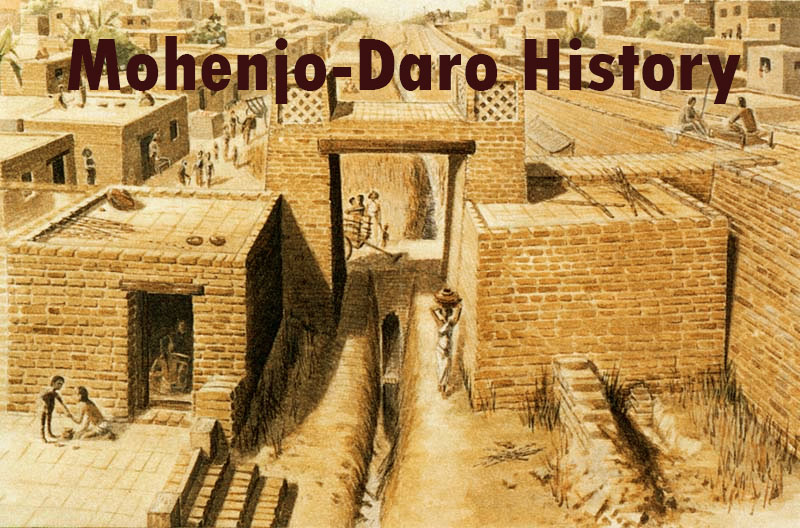
New Research Mohenjo Daro History --- Mohenjo Daro Facts by Umair Ahmad
The entire
city of Mohenjo-daro, the main city of thousands of years old civilization of
the Indus Valley, is still in the dark. The reason for this civilization has
not been determined to date, which was the reason that eliminated such a
sophisticated and advanced civilization.
The biggest
obstacle to this quest is Mohenjo-daro, a language that Darius has not yet
understood. However, now experts have claimed that the Mohenjo-daro who
succeeded in understanding the language of Mohenjo-daro.Remember
that the script of this civilization is on the seals, hinges and utensils found
in various discoveries. These phrases and symbols are very short and according
to experts, they are a sign of the language being developed. All attempts
to read and understand these texts and symbols have still been fruitless and,
therefore, the experts have not reached the complete history of this
civilization.But now
experts at the University of Washington and the Tata Institute of Fundamental
Research in Mumbai say they are working to understand the language.
Under the
combined research of the two universities, experts are comparing the language
found in this civilization with all the languages found to date.They say
that just as in modern times a word exists in different languages with
similar pronunciation and spelling, and it has the same meaning, the same
principle applies to ancient languages.
Experts
believe that they will certainly be able to find words and symbols similar to
the Indus Valley language in various ancient languages.According to
an article published in the journal Science, work has been started in this
regard and so far experts have found the words and symbols similar to the
language of Mohenjo-daro, the language of Meso-Ptolemy civilization and the
ancient Tamil language of the subcontinent.
If the
experts succeed in this endeavor, it will be a revolutionary step to understand
ancient history, and we will be able to get acquainted with the aspects of
history that were previously unknown to everyone.
Egypt pyramids Explanation by Umair Ahmad
January 01, 2020
Egypt pyramids Explanation by Umair Ahmad
Egypt catches everyone who tries to investigate a little in
its history, a culture that developed in a harsh environment and managed to
create an incredibly advanced society, both in medicine, art, sculpture,
engineering and especially architecture. There is so much to talk about Egypt,
that today we are going to focus on its funerary architecture, the Pyramids of
Egypt. We will know, what they were for, who ordered them to be built, how they
were built, etc.

LIFE AFTER DEATH IN THE PYRAMIDS:
You cannot understand the pyramids, without knowing their
beliefs, since both are related. The Egyptians believed in life after death,
for which all their lives were dedicated to prepare for the arrival of that
moment. The book of the dead is a proof of this, a guide on how the body and
soul should be prepared for that momentous moment.
The-pyramids-of-egypt-the-book-of-the-dead:
After death, the spirit or Ka, it was divided into two, the
Ba or soul and the Akh or spirit. Of the two parties, the Ba accompanied the
deceased in his grave, could move as he pleased, while the Akh, was sent
directly to the underworld of Osiris, who would be responsible for judging the
spirit of the dead. To know what life Anubis had lived, he deposited the
deceased's heart on one side of a scale, at the other end, Ma’at (goddess of
truth and justice), deposited the pen of truth.If the balance was not kept in
balance, the deceased would suffer eternally an infinite number of punishments,
but if on the contrary the balance was balanced, it meant that he was worthy of
living in the great kingdom, along with other good souls and with the gods at
peace. and harmony, eternally.
The-pyramids-of-egypt-pyramids:
This is where the need to create a lasting, eternal
construction is born, since the soul of the deceased will live forever. He will
also need everything he had in this world, since the belief of the ancient
Egyptians was that the deceased could lead a life in the great kingdom just as
he could lead when they were alive. Reason why, in the burials furniture,
jewelry, accessories, food and entertainment or games were introduced.
WHAT ARE THE PYRAMIDS OF EGYPT:
During this period only the Pharaoh was the only one who had
the possibility of a life beyond. That is why its constructions are so
colossal. In later times, the entire town could live an eternal life if its
heart passed the test of the balance, which made many graves bloom, but
obviously the difference in construction, size and content, nothing had to do.

To build the house that is going to be the home of a
Pharaoh, a lot of time and resources had to be invested, so when a pharaoh came
to power, the construction of what will be his eternal house was immediately
started.
The-pyramids-of-Egypt-construction-pyramids:
In the beginning it was thought that these constructions
were executed by slaves, but the latest research, has asserted that for the
construction of the pyramids, wage-earning peasants were hired, when their work
in the field had been completed, they moved to the cities to Work in large
constructions. These farmers received a payment that was made up of salt, wheat
and barley.
The Lost City of Giza, City of the Builders:
Peasants arrived from every corner of Egypt, while their
fields remained in rest period, they found in the cities, a way to survive when
the field did not produce, over time, they even became professional, creating
cities so that these workers they could live having the necessary services for
the performance of their functions. Cities equipped with medical services to
meet the needs of workers.The organization of what we call peonadas today was very
efficient, creating groups of four workers under the command of a foreman, who
would be in charge of telling them what work to do and how to do it, in
addition to controlling their workers, sometimes scattered, especially that
time was not wasted in working hours. The first architect known to him was Imhootip, was
responsible for the design of the first stepped pyramid and the oldest, located
in Sakkara, was commissioned by Pharaoh, approximately in the year 2750 B.C. Many archaeological remains support the construction of at
least 100, some have endured better in time than others, although most of them
with serious structural failures, since the only way to progress in the
calculations was through the correction of the faults detected.
A complex and safe building was needed, if a fear of the
Egyptians was the judgment of the spirit, another fear they had was the looting
or destruction of the corpse, since if this happened the Ba, he would not have
a home to return to and so much Akh, like Ba, would experience the dead again,
but this time it would be more traumatic.
why the pyramids were built?
What do you think?
How much realty in My Article?
An 11 year Old Girl Won 3 Gold Medals in Athlete Without wearing Shoes
December 28, 2019

But there is also a small number of athletes who do not need expensive and comfortable shoes to win. Reha Bellows, 11, hails from the Philippines, who recently won three gold medals at the provincial sports event.The important thing about the younger athlete's success is that he did not wear shoes in the race, but only bandaged his feet.

The athlete beat all the contestants who wore shoes during the race.
Reha's photos on social media went viral, as can be seen in the pictures that there are a few bandages on the foot of the young athlete, which he carries with himself the famous sports shoes brand Nike logo.People from all over the world have been congratulating her on the sentiment of Reha after her images went viral on social media.
Subscribe to:
Posts (Atom)


